American‑sector itineraries are the classic choice for a first visit. They usually combine time on Omaha Beach with a guided visit to the Normandy American Cemetery and at least one other key point, often Pointe du Hoc or a museum close to Utah Beach. The guide explains the landings on the coach and then anchors the story on the ground, leaving moments for you to stand on the sand and absorb the place in silence.
Canadian and mixed routes add variety. Some take you inside bunkers around Juno Beach or to the Canadian cemetery, others include the Arromanches 360 cinema so you see the hundred days of the Battle of Normandy stitched together in images. In our offer of experiences you will find these themes clearly marked, which makes it easier to decide whether you prefer a deep dive into one sector or a broader overview in one long day.
⚖️ How to choose the right Normandy tour format
- Larger coaches suit travellers who value structure, on‑board commentary and a clear schedule for each stop.
- Small‑group minivan tours give more space for questions, photographs and slight adjustments to timing on the ground.
- If you already know you want extra museum time or to add other regions, the multi‑day options described in the section on longer stays may fit better than a single packed day.
Planning your one‑day Normandy route from Paris
A typical Normandy D‑Day day trip from Paris starts between six and seven in the morning and returns around nine in the evening. Expect about three hours of travel each way, broken up with a rest stop, and four to six hours spread between beaches, museums and cemeteries. The idea is to fit two to four major sites without rushing the most emotional parts of the day, especially the cemetery visits.
Pack in layers, even in summer, because the coast can be windy and conditions often change between Paris and Normandy. Comfortable shoes are essential, as many itineraries include uneven ground, grass and sand. Some tours include a set‑menu lunch, others allow free time in a nearby town; when this is not clearly stated in the description it is best treated as Not indicated / Consult the provider, so you can plan to bring snacks or budget for a restaurant stop.
🧭 Typical timing for a Normandy D‑Day day trip
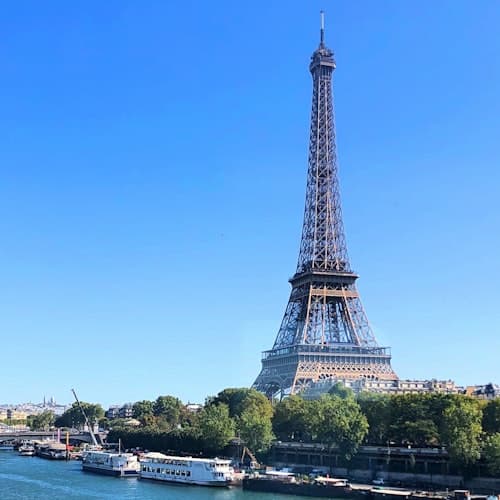
- Early departure from a central meeting point in Paris, often close to the Eiffel Tower or major stations.
- Mid‑morning arrival at the first beach or museum, with a short briefing before you walk around.
- Simple lunch break in a village, small town or roadside restaurant, with time to stretch your legs.
- Afternoon visits to the main cemetery and one or two additional sites, such as Pointe du Hoc or Arromanches.
- Evening drive back to Paris, usually with a short pause at a motorway service area.
⚖️ What you can realistically fit in one day
- Three headline sites and one shorter stop is a comfortable ceiling for a single day from Paris.
- Trying to see every beach, cemetery and museum in one outing usually leads to very short visits and a feeling of rushing.
- If you already know you want extended time in places such as the Caen Memorial Museum, consider a longer stay as described in the section on two and three day trips.
D‑Day highlights that fit in a one‑day Normandy route
The D‑Day coastline stretches for many kilometres, and no single day trip can reach every place. The most balanced itineraries from Paris focus on a handful of sites that together tell the story of 6 June 1944 and the following weeks, combining beaches, dramatic viewpoints and spaces of remembrance.
Omaha Beach
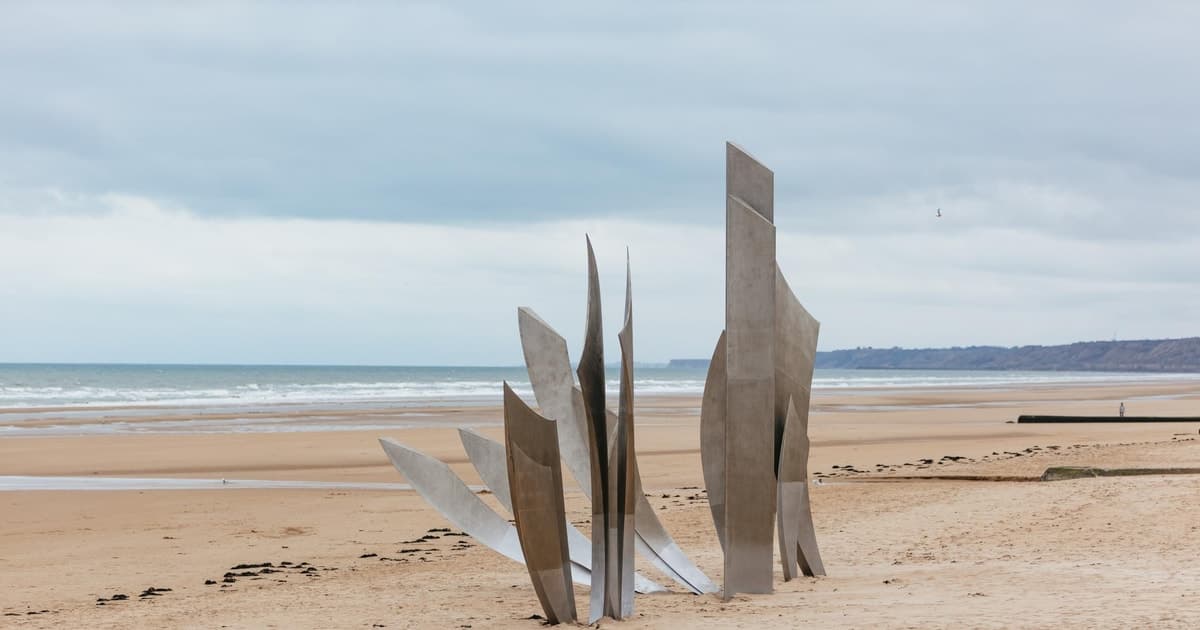
Today the sand at Omaha Beach is quiet, but the scale of the bay and the bluffs behind it make it easy to imagine what the landings demanded. Many routes place Omaha at the heart of the day because it connects directly with the Normandy American Cemetery, so you see both the shoreline and the place where many of the fallen are buried.
Pointe du Hoc
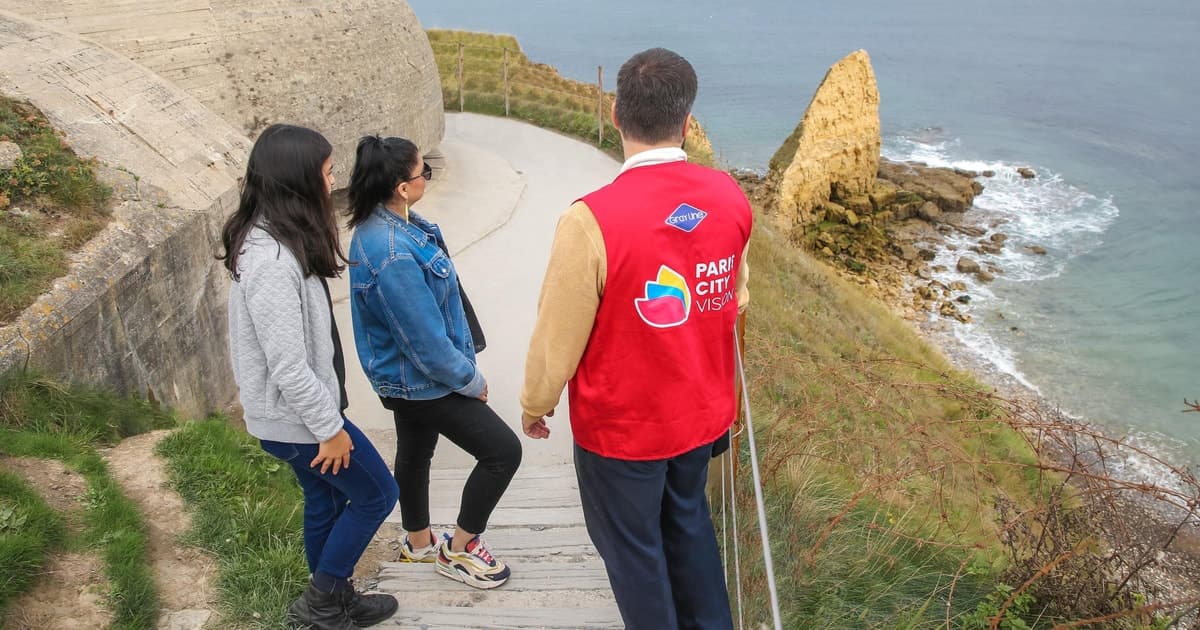
Pointe du Hoc is a headland still marked by shell craters and bunkers. From the clifftop you can look towards the sectors that depended on the guns that were once positioned there. Walking the paths helps you understand why the site was so critical to both Omaha and Utah Beach and why the Rangers were sent to climb the cliffs under fire.
Normandy American Cemetery
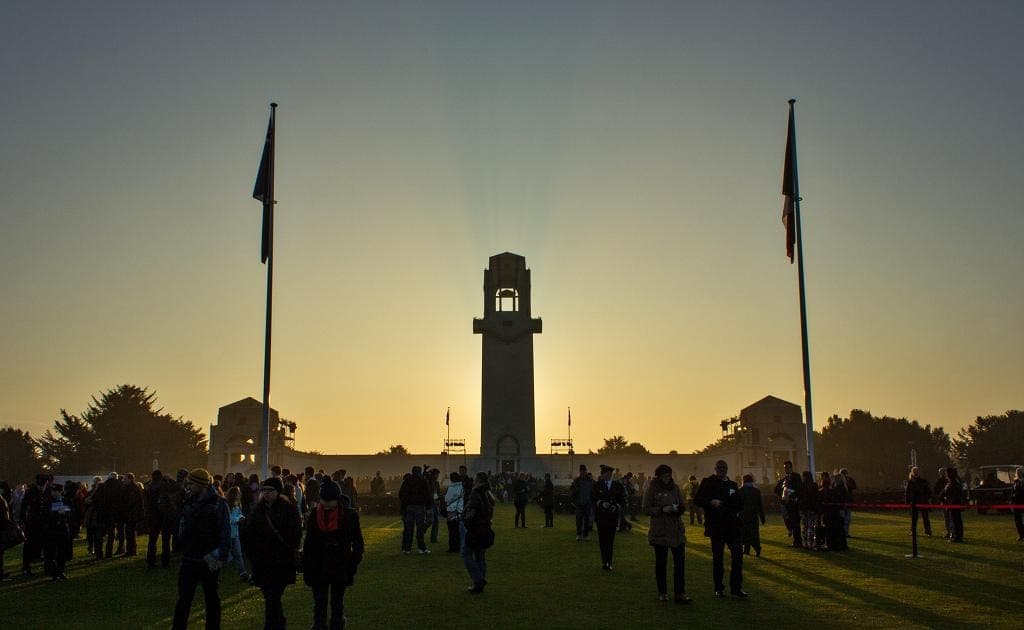
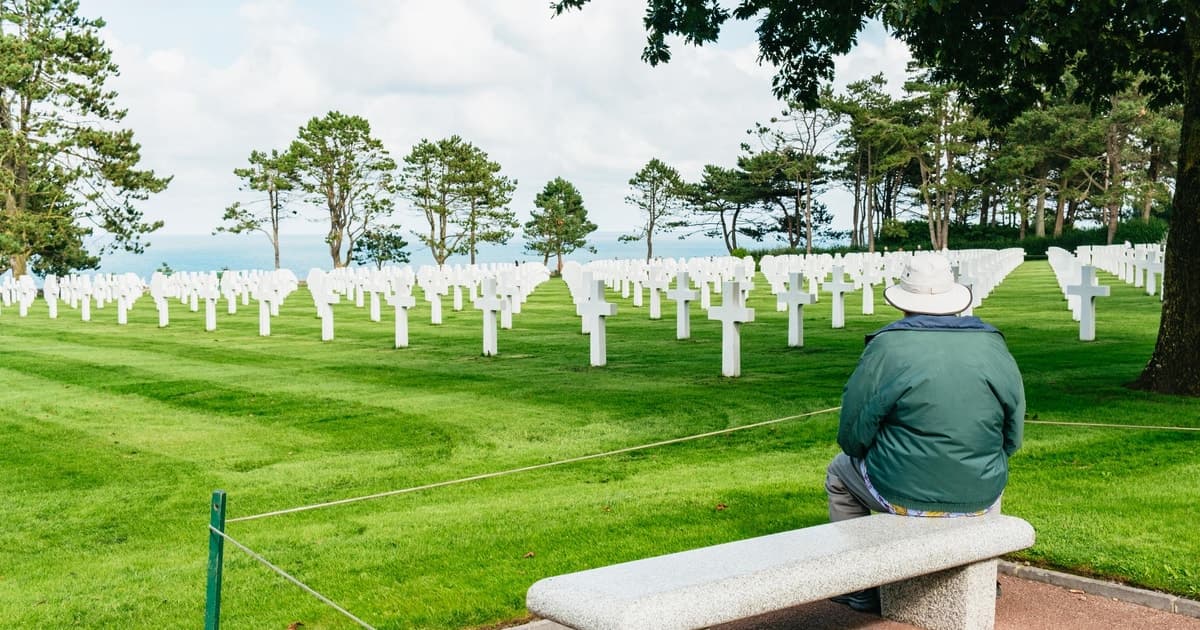
The Normandy American Cemetery holds thousands of graves, lined up in long rows that face the sea. Most tours allow a quiet moment here so you can move between the memorial, the chapel and the overlook in your own time. Audio and displays help explain Operation Overlord and the battles that followed the landings.
Utah Beach Landing Museum
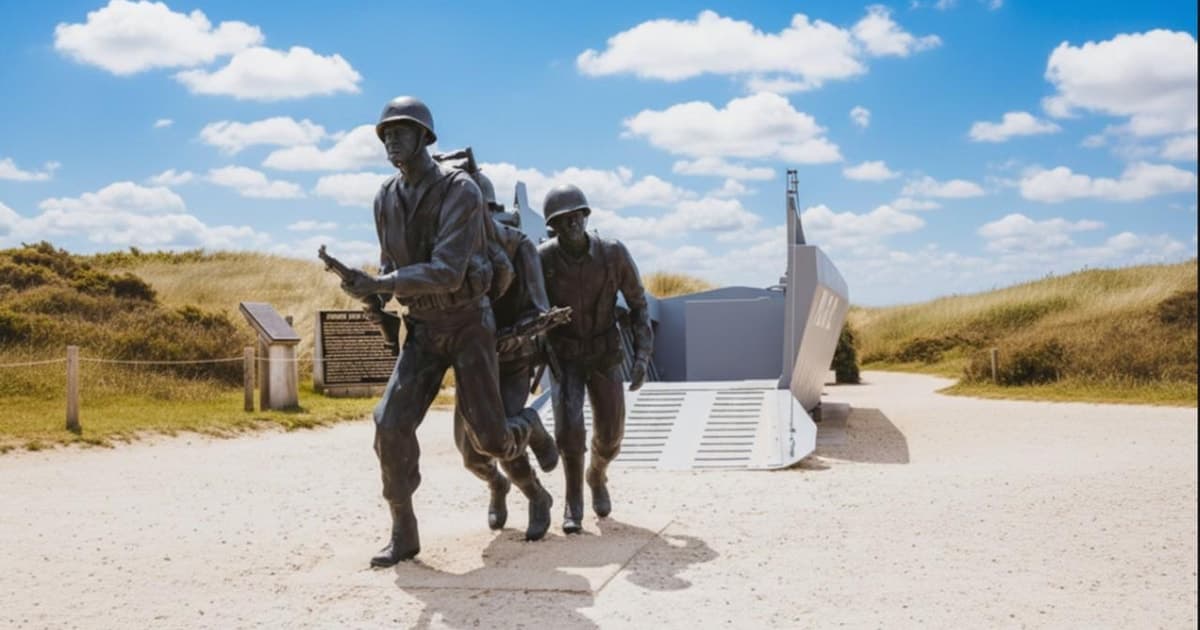
Built directly behind the dunes, the Utah Beach museum combines artefacts, personal stories and larger displays such as an aircraft from the period. It is compact enough to visit on a day trip yet detailed enough to give context to what you see on the sand outside. Several itineraries use it as an efficient way to cover the American landings further west.
Arromanches and the 360 cinema
Above the port of Arromanches there is a viewpoint over the remains of the artificial harbour used after D‑Day. Nearby, the circular cinema projects archive footage of the hundred days of the Normandy campaign on multiple screens at once. Day trips that stop here work well for travellers who like to link the ground they are walking on with moving images and maps.
Juno Beach Centre
The Juno Beach Centre tells the story of the Canadian forces that landed between Courseulles‑sur‑Mer and nearby villages. Exhibitions cover the home front, the landings and the aftermath, and seasonal bunker tours add an extra layer for those who want to see the defences from the inside. If you are interested in this perspective, the routes described in the Canadian sector section are the natural fit.
Bayeux old town
Bayeux is often used as a practical hub because of its station and its position near several landing beaches. When a day trip includes a stop here, you can stretch your legs in streets that survived the war with little damage, see the cathedral from the outside and, on longer visits, explore the famous tapestry that predates D‑Day by many centuries.
Caen Memorial Museum
The Caen Memorial Museum covers the wider history of the twentieth century, with dedicated spaces for the Second World War, the Normandy landings and the Cold War. A full visit can easily fill a day, so most one‑day outings from Paris either skip it or include only a short introduction. If this museum is high on your list, it is better planned as part of a multi‑day stay in Normandy.
American‑sector Normandy day trips from Paris
American‑sector day trips usually weave together Utah, Pointe du Hoc, Omaha and the Normandy American Cemetery in one loop. The guide traces the landings on board, then gives short briefings at each stop so that you understand the terrain before you walk it. Many of these outings include a traditional lunch in a village or a simple restaurant and some also add a cider tasting to anchor the day in local flavours as well as history.
These itineraries work especially well for first‑time visitors and for travellers who want to follow the path of relatives who fought in this part of Normandy. Time on the beaches is divided between guided explanations and free time, and at the cemetery many guides deliberately step back to give space for personal reflection. The coach windows frame the countryside between stops, so even the transfers contribute to your sense of place.
If you are comparing several excursions in our catalogue of activities, pay attention to how much time is reserved for the cemetery and for walking at sites such as Pointe du Hoc. Diagrams and lists of stops are helpful, but the real difference between tours often lies in how generous the schedule feels once you are on the ground. To see how these American‑sector routes sit next to other escapes from the city, you can also look at our wider selection of day trips from Paris.
⚖️ When an American‑sector tour is the best choice
- When you want a clear first reading of D‑Day with a focus on Omaha, Utah and the American Cemetery.
- When your time in Paris is limited and you can only devote one long day to Normandy.
- When you value having the coach, driver and guide arranged together rather than juggling trains and local transfers on your own.
🧭 Details to check before booking
- Group size and vehicle type, especially if you prefer small groups or need extra space for comfort.
- Walking distances at each site and whether paths are on sand, grass or paved ground.
- Whether lunch, tastings and museum entrances are included in the advertised price or listed as Not indicated / Consult the provider.
Canadian‑focused and mixed Normandy routes
Some Normandy day trips from Paris are built around the Canadian story. They centre on Juno Beach, the Juno Beach Centre museum and the Canadian cemetery, and often add time in nearby villages that were liberated by Canadian units. Others mix Canadian stops with American ones, giving you a broader Allied view in a single day.
In these itineraries, more of the narrative unfolds inside the museum spaces. Guides use the exhibitions and films to explain how the landings were prepared, then step outside to connect what you have seen with the shoreline and the surrounding countryside. Bunker visits, when included, provide a strong sense of how fortifications were organised along this part of the coast.
Canadian travellers often choose these routes to follow a national thread, yet they are equally valuable if you simply want to understand D‑Day beyond the American focus. Many people combine a Normandy D‑Day day trip with another outing of a different tone on a separate day, for example an impressionist escape to Monet’s village described in our Giverny day trips from Paris guide.
⚖️ Who tends to choose Canadian‑focused tours
- Travellers for whom the Canadian involvement in D‑Day has personal or family significance.
- Visitors who want a museum‑heavy day with time inside exhibitions and guided bunker visits.
- People who have already seen the American sector on a previous trip and now want a complementary perspective.
🧭 Booking tips for Juno‑based routes
- Check seasonal opening hours for the Juno Beach Centre and for any bunker tours mentioned in the description.
- Look at the planned time inside the museum and on the beach so you know whether the day is more reflective or more on the move.
- Confirm the language of guiding and of any audio content included, especially if you are travelling with several generations.
When one day in Normandy is not enough
A single day from Paris delivers the essentials, but many travellers leave feeling they could easily have stayed longer. Two and three day trips add evenings by the sea, slower walks through towns such as Bayeux or Saint‑Malo and extra time in museums that are hard to fit into a one‑day schedule.
Two day itineraries often combine the D‑Day beaches with Saint‑Malo and Mont Saint‑Michel. The first day is usually devoted to landings sites and cemeteries, while the second day follows the coast to walled towns and the island abbey. This format suits travellers who dislike rushing and prefer to keep daily driving times shorter.
Three day trips add more layers. Common combinations include Normandy, Mont Saint‑Michel and the Loire Valley chateaux, which together cover very different periods of French history. Within our catalogue of activities you will find both two and three day experiences that start and end in Paris, so you do not have to rework your hotel booking in the capital. If Mont Saint‑Michel is a highlight for you, take a look at the dedicated Mont Saint‑Michel day trips from Paris overview.
⚖️ Extra benefits of staying longer in Normandy
- Time to explore smaller sites and villages without watching the clock.
- Greater flexibility to adjust your plan if weather changes along the coast.
- The possibility of visiting the Caen Memorial Museum or returning to a beach at a quieter time of day.
Transport, timing and the best moment to visit Normandy
The easiest way to reach the Normandy D‑Day beaches from Paris in one day is to join a guided coach or minivan tour. It removes the need to coordinate trains, car hire and parking, and the guide uses the travel time to explain the context of what you are about to see. Travel by train or rental car is possible, but each option has its own trade‑offs.
Guided coach or minivan from Paris
A guided day trip that starts and ends in Paris is the most straightforward format for most visitors. You meet your group at a clear departure point, travel together to Normandy and are dropped back in the city at night. This format is particularly practical if you are new to France, travelling with children or older relatives or simply do not want to drive long distances in one day.
Normandy by train
Direct trains from Paris Saint‑Lazare to Caen usually take around two hours, and services to Bayeux often take between two hours fifteen minutes and two hours thirty minutes. From either station you still need local transport to the beaches, whether that is a guided tour, a private driver or hired car. This combination can work well if you want to stay overnight in Normandy rather than return to Paris the same day.
Driving from Paris to the D‑Day beaches
Driving gives you full control over your schedule. In light traffic, the road journey from Paris to towns such as Bayeux or Carentan is often around three hours, though congestion and stops can extend this. Once in Normandy you will need to manage local roads, parking near busy sites and daylight hours, especially in winter. For a single intense day, many people find it more restful to let a professional driver handle these elements.
Best months for a Normandy D‑Day day trip
Late spring and early autumn are often the most comfortable periods for a Normandy visit. May, June and September bring longer days and generally mild weather. Early June is the busiest moment because of D‑Day commemorations, which can mean larger crowds and higher demand for tours. Winter visits are quieter but come with shorter daylight and more frequent rain or wind along the coast.
How long you need in Normandy
One day from Paris is enough to see a focused selection of D‑Day sites such as Omaha, Pointe du Hoc and the Normandy American Cemetery. Two days allow you to add museums such as the Utah Beach Landing Museum or the Caen Memorial and to spend time in towns like Bayeux. With three days or more you can mix the landing beaches with Mont Saint‑Michel or the Loire Valley, as described in the section on longer stays.
Practical notes on costs and access
- Outside Paris, many visitors find everyday prices for meals and accommodation a little lower, but the exact difference depends on the season and the standard you choose, so detailed figures are Not indicated / Consult the provider.
- Most stretches of the Normandy D‑Day beaches are open to walkers, though some areas are protected by signs or fences; follow local instructions and respect memorial spaces.
- Weather can change quickly. Bring a light waterproof layer and be prepared for wind at exposed viewpoints such as Pointe du Hoc.
Comparison table of Normandy day trips from Paris
This table summarises the main Normandy D‑Day trip styles you will find in our catalogue of activities. Use it as a quick filter, then dive into each section of this guide to see which experience matches your time, interests and energy best.
| Type of experience |
Approximate duration |
Main focus |
Ideal for |
Typical stops |
Notes |
| American‑sector highlights day trip |
About thirteen to fourteen hours from Paris |
Omaha Beach and the Normandy American Cemetery |
First‑time visitors and many American travellers |
Omaha Beach, Normandy American Cemetery, Pointe du Hoc or Utah Beach |
Often includes a simple lunch stop and quiet time at the cemetery. |
| Utah Beach and Pointe du Hoc focus |
About thirteen to fourteen hours from Paris |
Terrain and tactics around the western beaches |
Travellers who want longer walks on the cliffs and dunes |
Utah Beach Landing Museum, Pointe du Hoc, shorter visit to Omaha or a cemetery |
More time on foot and at viewpoints, slightly fewer different stops. |
| Canadian Juno Beach Centre day trip |
About twelve to thirteen hours from Paris |
Canadian role in D‑Day and its memory |
Travellers with a special interest in Canadian history |
Juno Beach Centre, Juno Beach, Canadian cemetery and nearby villages |
Museum‑heavy day with the option of bunker visits in some experiences. |
| Mixed overview with Arromanches cinema |
About thirteen to fourteen hours from Paris |
Broad Allied perspective with strong visual context |
Visitors who want to see both beaches and Arromanches in one day |
Omaha or Utah, Normandy American Cemetery, Arromanches viewpoint and 360 cinema |
Good balance between outdoor sites and an immersive film on the Battle of Normandy. |
| Two day Normandy and Mont Saint‑Michel tour |
Two days with one night in Normandy |
D‑Day sites plus coastal towns and the abbey island |
Travellers who prefer a slower pace and coastal evenings |
D‑Day beaches and cemeteries, Saint‑Malo or similar town, Mont Saint‑Michel |
Includes extra walking in towns; hotel category and meals are usually listed as Not indicated / Consult the provider. |
| Three day Normandy, Mont Saint‑Michel and Loire Valley |
Three days with two nights outside Paris |
Combination of D‑Day history and Loire chateaux |
Slow travellers or those wanting several regions in one trip |
D‑Day beaches, Mont Saint‑Michel, selected Loire Valley castles |
Best suited to travellers who enjoy full days on the road and varied themes. |
Frequently asked questions about Normandy day trips from Paris
Can you really visit the Normandy D‑Day beaches on a day trip from Paris?
Yes. With an early departure and a late return, guided tours manage to fit several key sites into one long day. Experiences like those described in the section on tour styles usually include at least one major beach, the Normandy American Cemetery and another important stop such as Pointe du Hoc or Arromanches. It is an intense day, but for many travellers it becomes one of the most memorable parts of their time in Paris.
Is one day in Normandy enough?
One day from Paris is enough to see a focused slice of the D‑Day story, especially if you join a structured tour. You can expect to visit two or three headline sites, often including Omaha Beach and the American Cemetery. If you want to cover several sectors, add museums such as the Caen Memorial or spend evenings on the coast, the options in the section on longer stays will fit better than a single outing.
What is the best way to tour the Normandy D‑Day beaches?
For most visitors, a guided day trip that starts and finishes in Paris is the simplest and most efficient way to see the main D‑Day sites. It removes concerns about driving, parking and opening times, and a specialist guide helps you read the landscape at each stop. If you prefer more independence, you can travel by train to Caen or Bayeux and join a local tour from there, or hire a car and design your own route using the stops outlined in the section on key sites.
What is the easiest way to get from Paris to Normandy?
The easiest way for a one‑day visit is to book a guided coach or minivan experience that departs directly from Paris, as described in the transport section. There are also direct trains from Paris Saint‑Lazare to Caen and Bayeux if you plan to stay overnight, and car hire for those comfortable with driving several hours each way. For a first visit on a tight schedule, the organised coach or minivan option is usually the least stressful.
How much time do you need to see Normandy properly?
It depends on how deep you want to go. One day lets you see a selection of beaches and a main cemetery. Two days allow you to add museums and smaller sites and to spend time in towns such as Bayeux. Three days or more open the door to combinations with Mont Saint‑Michel or the Loire Valley, which you will find outlined in the longer stay section. History enthusiasts often feel that a second or third day lets everything sink in more calmly.
What month is best to visit the Normandy beaches?
Many travellers find May, June and September the most balanced months for a Normandy visit. Days are longer, temperatures are mild and most sites run extended opening hours. Early June brings ceremonies and commemorations, which can be very moving but also busier. Winter is quieter yet comes with shorter daylight and a higher chance of rain and wind, something to keep in mind for outdoor stops on the coast.
How much is a train ticket from Paris to Normandy?
Train fares between Paris and cities such as Caen or Bayeux vary by date, time, demand and any discount cards you may hold. Advance one‑way tickets often start in a moderate price range and can rise on busy days or for flexible fares. Because timetables and prices change, exact amounts are Not indicated / Consult the provider; it is always worth checking live fares when you are ready to confirm your plans.
Can you visit the Normandy beaches without a car?
Yes. Guided day trips from Paris already include all transport, and there are local tours from Bayeux and Caen that collect travellers arriving by train. Trying to cover several landing sites by public bus and taxi in a single day is challenging, so if you do not want to drive, a structured tour is usually more efficient and allows more time at the beaches themselves.
Is a guided D‑Day tour worth it?
For most visitors, yes. A knowledgeable guide links unit names, timelines and personal stories directly to what you see on the beaches and in the cemeteries. This context helps you make sense of distances and decisions that are hard to grasp from a guidebook alone. Many travellers rank their D‑Day tour among the most powerful experiences of their time in France, even though it requires an early start and a late finish.
What town is closest to the D‑Day beaches?
The landing beaches cover a long stretch of coast rather than clustering around a single town. Bayeux is a popular base for visiting Omaha, Gold and nearby sites because it has a rail connection and good road links. For Utah Beach, towns such as Carentan and Sainte‑Mère‑Église are close, while Arromanches lies next to the remains of the artificial harbour. When you travel from Paris on an organised day trip, the logistics of distances and access are handled for you.
What is the best town to stay in when visiting the Normandy D‑Day sites?
Bayeux and Caen are the most common bases for multi‑day visits. Bayeux offers a compact historic centre and easy access to several beaches and cemeteries. Caen is larger, with more urban services and the major memorial museum. Smaller places such as Arromanches appeal to travellers who want to stay right on the coast. In many cases, accommodation and meal prices feel slightly gentler than in central Paris, but exact differences are Not indicated / Consult the provider and depend on season and hotel category.