Farmers Markets in Rome

Last update:
Continue planning your trip to Rome
- Free tour
Free Tours in Rome
Guided Tours
Vatican City Tours
Vatican Skip-the-Line Tours
Tickets & Passes
Ancient Rome Tours
Colosseum & Roman Forum Tickets
Colosseum Arena Tours
Vatican City Tickets
Pantheon Skip-the-Line Tickets
Galleria Borghese Tours
Rome Night Tours
Street Food Tours
Pantheon Tours
Catacombs Tours
Other Experiences
Day Trip to Pompeii and Amalfi Coast
Hop-On Hop-Off Bus Tours
Trastevere Walking Tours
Day Trip to Pompeii
Pizza Making Classes
Day Trip to Pisa
Day Trip to Florence and Pisa
Day Trip to Orvieto
Day Trip to Sorrento
Wine Tour from Rome


Farmers market Rome: a morning ritual that tastes like the city
In a farmers market in Rome, the city speaks in basil, citrus, and quick vendor banter, therefore the best way to enjoy it is with a plan that fits your pace: a Campo dei Fiori food and wine walk that threads the Pantheon and Trevi into the same morning, a market tour that ends at a local home table, or a hands on cooking class after shopping for ingredients you will actually use. Our offer of experiences turns browsing into a story you can taste, whether you want a fast orientation, a slower conversation with producers, or a meal that lingers.
📚 Choose your experience
Campo dei Fiori market food and wine walk with Rome’s headline sights
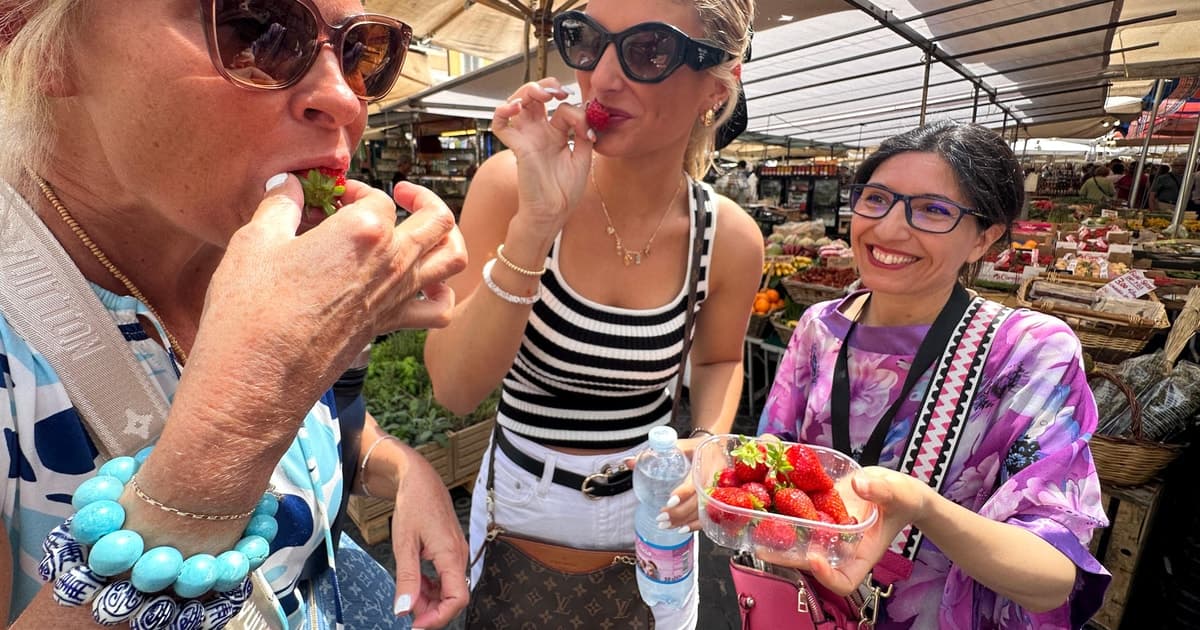
This is the Rome farmers market experience for travelers who want flavor and orientation in the same stride: you start where the stalls set the tone, then the route carries you past the Pantheon and into the hush before Trevi. The rhythm is quick but not rushed, and the tastings land like punctuation marks between stone and fountain.
Expect a mix of market browsing and street friendly bites, with context on what locals look for when they buy cheese, bread, cured meats, or seasonal produce. It is also a smart way to learn what to order later, therefore your next trattoria menu feels less like a puzzle.
If this morning unlocks your appetite for the region beyond the city, bookmark the Day Trips from Rome guide and keep the momentum with a countryside escape that still feels deeply Italian.
🍷 Quick decision cues
- Best for first timers and short stays.
- Pairs tastings with iconic city center sights.
- Ideal when you want guidance, not lectures.
- Works well before a museum afternoon or siesta.
Bring a reusable bag for small purchases and keep your phone away when crowds compress; in busy squares, attention is currency, and a calm grip makes the experience feel lighter.
Market tour and dining at a local home
For a more intimate farmers market Rome Italy story, the day begins with a host who shops like a local: you linger at counters, learn which tomatoes smell like summer, and watch how regulars buy with quiet confidence. The best part comes after, when the market bags turn into a table at a home and the city suddenly feels personal.

Some versions lean into a cooking session before the meal, others focus on the hosted dining itself, therefore you can choose whether you want technique or pure hospitality. In both cases, conversation becomes the souvenir: why certain cheeses are served at room temperature, which olive oil tastes peppery, and how Romans keep lunch simple but serious.
This format pairs well with a high contrast day after; on the other hand, if you want to trade flavors for ruins, the Pompeii Tours from Rome option makes the next chapter feel cinematic.
🏠 Who this suits
- Travelers who value conversation over crowds.
- Couples celebrating quietly, without spectacle.
- Friends who want a long table vibe.
- Anyone curious about home style Roman habits.
Share dietary needs early and treat the market as part of the meal, not a checklist; the more you ask and taste, the more the host can translate ingredients into culture.
Local market shopping and a hands on cooking class
This is the most practical way to experience farmers markets in Rome: shop with a host who explains what is truly fresh, then turn those choices into a meal you can repeat. The energy is focused and friendly, and the payoff is confidence, because you stop guessing what to buy and start choosing with purpose.
Think of it as a cheat sheet for Roman staples: how to read a deli counter, what makes pecorino taste sharp or sweet, and which vegetables behave best in a simple sauce. Moreover, the market walk teaches you the small language of shopping, from asking for a taste to noticing what locals buy in unremarkable quantities.
If your trip is built around food and craft, a Florence Day Trip from Rome adds a different ingredient list and a museum level art fix, therefore you return to Rome with fresh comparisons.
🍝 Small but important prep
- Bring a tote for fragile market finds.
- Wear closed shoes for wet floors.
- Share dietary needs before you meet.
- Keep your camera handy, then taste.
When you leave, the souvenir is not only a full stomach but a new instinct for what to buy and how to cook it, therefore even a quick snack later feels more intentional.
Frequently asked questions
Does Rome have farmers markets?
Yes. Alongside neighborhood food markets, Rome has producers focused markets where farms from the surrounding region bring seasonal goods. In our catalog of activities, guided options range from a shorter city center tasting walk around 90 € to market to table experiences around 170–190 €; check GuruWalk's activity catalog to see the latest prices and start times.
What is the most famous market in Rome?
The most talked about is Campo de’ Fiori, because it sits in the historic center and feels like a living postcard. It is a strong choice for quick browsing and edible souvenirs, however the most authentic atmosphere often appears in neighborhood markets away from the main squares.
What is the famous market square in Rome?
Piazza Campo de’ Fiori is the classic market square people mean, and it is easy to combine with nearby landmarks on foot. If you like a route that stacks experiences, it connects naturally with the Pantheon area and the lanes toward Piazza Navona.
What day is market day in Rome?
There is not a single market day, because many neighborhood markets run on most mornings, while some bigger formats lean into weekends. For the best selection, go early and confirm the latest opening pattern close to your visit.
What’s worth buying in Rome, Italy?
Go for items that travel well and scream Rome: olive oil, aged cheese, cured meats, dried herbs, and pantry staples tied to local pasta sauces. If you want something fresh, choose seasonal fruit you can eat the same day rather than carry around.
What are the do and don’ts in Rome markets?
Do greet the vendor and ask before touching produce, therefore you get better service and better advice. Do keep your bag closed and in front in busy areas, and do carry small change. Do not block the aisle while taking photos, and do not assume tastings are automatic.
Does Italy have farmers markets?
Yes, and the best ones are built around seasonality: what shows up today is often what grows nearby right now. In Rome, that translates into a strong focus on regional products from Lazio, with varieties that change quickly across the year.
Is Trajan’s Market worth it?
If you enjoy Roman history, yes, because it is an archaeological complex and museum that explains how commerce worked in antiquity. It is not a food market, however it pairs beautifully with a modern market morning for a then and now contrast.
Is Trastevere, Rome worth visiting?
Yes, especially if you like lived in streets, small plazas, and a food scene that warms up after dark. In the morning it is calmer, therefore it is a good moment to look for a local produce atmosphere before the evening crowds arrive.