Capuchin Crypt Tours in Rome




Last update:
Continue planning your trip to Rome
- Free tour
Free Tours in Rome
Guided Tours
Vatican City Tours
Vatican Skip-the-Line Tours
Tickets & Passes
Ancient Rome Tours
Colosseum & Roman Forum Tickets
Colosseum Arena Tours
Vatican City Tickets
Pantheon Skip-the-Line Tickets
Galleria Borghese Tours
Rome Night Tours
Street Food Tours
Pantheon Tours
Catacombs Tours
Other Experiences
Day Trip to Pompeii and Amalfi Coast
Hop-On Hop-Off Bus Tours
Trastevere Walking Tours
Day Trip to Pompeii
Pizza Making Classes
Day Trip to Pisa
Day Trip to Florence and Pisa
Day Trip to Orvieto
Day Trip to Sorrento
Wine Tour from Rome


Capuchin Crypt Rome: music, bones and baroque mystery
Under Via Veneto, the Capuchin Crypt in Rome swaps polished marble for walls made of skulls and vertebrae, turning a short visit into a quiet shock. In our offer of experiences you can fold an evening opera, museum visit and walk through the chapels into the same night, so the memento mori atmosphere becomes one chapter in a wider Roman story instead of just a quick macabre stop.
📚 Choose your experience
Opera and crypt visit
An intimate concert framed by bone-lined chapels.
Inside the museum and chapels
Understand the Capuchin story before the ossuary.
Fit the crypt into Rome
Slot it between night walks and day trips.
Frequently asked questions
Resolve timing, dress and bones in one place.
Opera in the Capuchin Crypt: music among bones
The experience Opera: Capuchins Crypt - Music Art And Mystery turns a simple museum ticket into a staged evening around Via Veneto. You meet near the entrance, listen to live opera and sacred music in an intimate setting and then cross into the bone-filled chapels, where the silence after the final aria makes every skull feel like part of the score.

It suits travellers who want a compact but intense night rather than a quick daytime dash through the crypt, and who prefer stories and music to long wall texts. The pace leaves enough time to absorb the museum, step slowly through the chapels and still walk back towards the centre for a late drink under Rome's streetlights.
Because the crypt space is small, groups are usually kept to manageable sizes, which helps the sound and the atmosphere. These formats tend to bundle museum entry, crypt access and the concert in one reservation, so you do not juggle separate tickets; check GuruWalk's activity catalog to see the latest prices and dates.
🎭 Opera evening or daytime visit?
- Day ticket: quicker, self-guided museum and crypt.
- Opera night: music plus guided storytelling before bones.
- Evening slot: often quieter corridors and chapels.
Visiting the Capuchin Crypt museum
Before the bones, the route takes you through a compact museum about the Capuchin friars, their austere life and their work with the poor. Rooms explain the convent on Via Veneto, the spirituality of the order and display vestments, liturgical objects and art, including a moving Saint Francis in meditation often linked to Caravaggio.
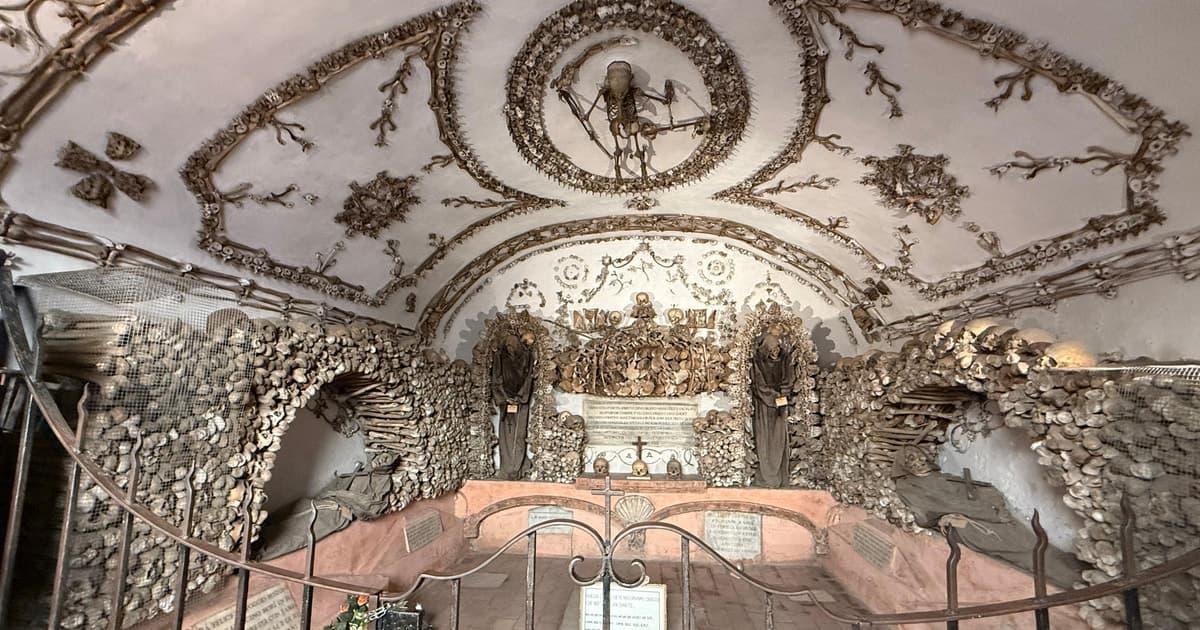
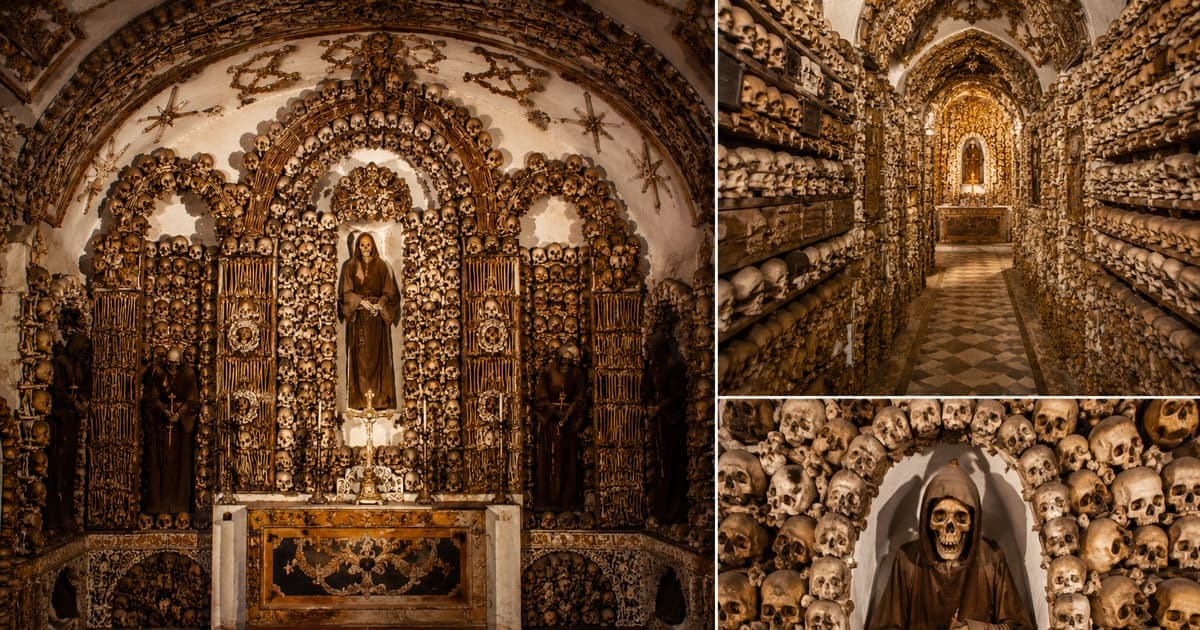
Only then do you step into the sequence of chapels that made the Capuchin Crypt famous, where skulls, pelvises and bones form arches, rosettes and chandeliers. The decoration is intended as a visual sermon on mortality and resurrection, underlined by inscriptions that remind visitors that what the friars once were, we will become.
Most visits take around an unhurried hour if you listen to the audio guide and pause in each room, with more time if you like to read every panel. Arriving early in the day or towards the last slots helps soften queues at the entrance and keeps the crypt itself calmer.
🕰 How long and when to go
- Plan at least one solid hour inside.
- Early or late entry feels less rushed.
- Leave buffer for ticket lines and security.
🧭 Practical details and dress code
- Shoulders and knees covered out of respect.
- Expect strict rules on silence and photography.
- Light layers help in the cool, dry air.
Capuchin Crypt and the rest of your Rome itinerary
The crypt stands on Via Veneto next to Piazza Barberini, so it is easy to weave into a broader walk across central Rome. Many travellers see it after an afternoon in nearby churches, then drift downhill towards the Trevi Fountain and the Spanish Steps for a gentler end to a heavy theme.
An evening visit also pairs naturally with a Rome night tour, shifting from skull-lined chapels to floodlit piazzas and narrow alleys guided by stories. That contrast between shadowy interiors and the city glowing outside makes the Capuchin Crypt feel less like an isolated oddity and more like one movement in a longer Roman symphony.
On a longer stay you can keep the crypt as a compact city experience around the days you dedicate to longer day trips from Rome. Travellers drawn to mortality, ruins and volcanic landscapes often also look at Pompeii tours from Rome, using the crypt as a short, concentrated counterpoint to a full day among ancient streets and ash.
Frequently asked questions about the Capuchin Crypt in Rome
What is the Capuchin Crypt in Rome?
The Capuchin Crypt is a small complex of chapels beneath the church of Santa Maria della Concezione dei Cappuccini on Via Veneto. Its walls and ceilings are decorated with the bones of thousands of Capuchin friars arranged in patterns, turning the space into a meditation on death and hope rather than a conventional burial vault.
Can you visit the Capuchin Crypt?
Yes, the crypt is open to visitors as part of a combined museum and ossuary route, usually with an audio guide that explains the history of the order and the meaning of the bone decoration. You can enter with a simple ticket or choose experiences that add guided commentary or music; check GuruWalk's activity catalog to see the latest available formats and prices.
How long does the Capuchin Crypt visit take?
A straightforward visit with audio guide usually lasts about an hour, enough to pass through the museum rooms and pause in each chapel. Guided tours and opera evenings need a longer slot because they add introductions, music and time for questions, so plan the crypt as a focused half of your day or as the core of an evening.
Is the Capuchin Crypt worth visiting?
For travellers comfortable with the sight of real human bones, the Capuchin Crypt is a powerful, unforgettable stop that says more about Roman spirituality than many larger museums. If you prefer your history without physical remains, it may feel overwhelming; in that case, a night walk or other church visits might suit you better.
Why did they make the Capuchin Crypt?
When the Capuchins moved to the present convent in the seventeenth century, they brought the remains of friars from earlier burial grounds and arranged them under the church. The idea was to create a place where the community could pray among their dead and remember the brevity of life, using bones as a stark catechism instead of marble sculptures.
Who is buried in the Capuchin Crypt?
The bones belong mainly to Capuchin friars from several centuries, whose remains were moved and reused as new members of the community died. Historical accounts also mention some lay people connected with the convent, but the overall impression is that you are standing in the middle of the order's collective graveyard.
Are the skulls in the Capuchin Crypt real?
Yes, the skulls and other bones are real human remains, not plaster copies or props. They come from deceased friars and some other burials whose bones were cleaned and arranged over time, which is why respectful behaviour and modest dress are strongly encouraged inside the crypt.
How many bodies are in the Capuchin Crypt?
Estimates speak of several thousand individuals whose bones were brought to the convent and reused in the decorations over the centuries. The exact number is less important than the effect: everywhere you look, ribs, skulls and femurs form the architecture, making it impossible to forget how many lives are represented in that small space.
Is the Capuchin Crypt haunted?
Officially the site is treated as a place of prayer and reflection, not a haunted attraction, and there is no endorsed ghost lore. Some visitors and storytellers like to share eerie impressions or legends, especially on night walks, but the crypt itself is run by the friars as a religious space with a clear spiritual message.

Discover related activities in Rome