Rome Underground Tour
Discover Rome


Last update:
Continue planning your trip to Rome
Rome underground tour: the Eternal City, one layer at a time
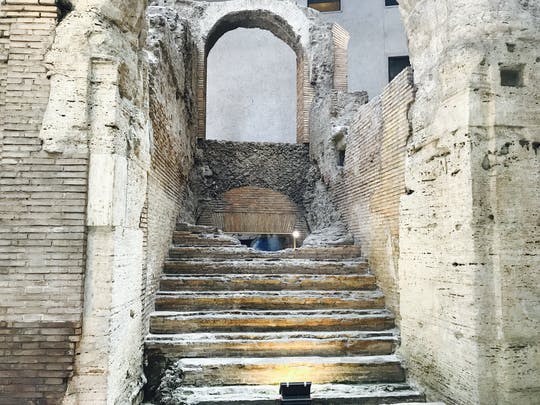
Rome rewards the curious: beneath familiar streets, you can step into silent catacombs, descend under Piazza Navona to the Stadium of Domitian, and trace hidden corridors under major basilicas where time feels compressed. Our offer of experiences covers fast, self-paced entries and deeper guided visits; combine an underground stop with open-air classics for contrast, or keep the theme going after dark with Rome night tour experiences that make the city’s shadows part of the story.
📚 Choose your experience
Catacombs guided tours
Quiet corridors, strong storytelling.
Priscilla Catacomb visit
Small details, big atmosphere.
Navona Underground
A stadium hiding in plain sight.
Vatican underground access
Basilica depth with a guide.
Santa Maria Maggiore below
Sacred space, hidden rooms.
Case Romane del Celio
Domestic Rome, unexpectedly close.
Leonardo da Vinci Exhibition
Indoor break, inventive energy.
Frequently asked questions
Time, comfort, and smart choices.
Catacombs guided tours: silence, symbols, and cool air
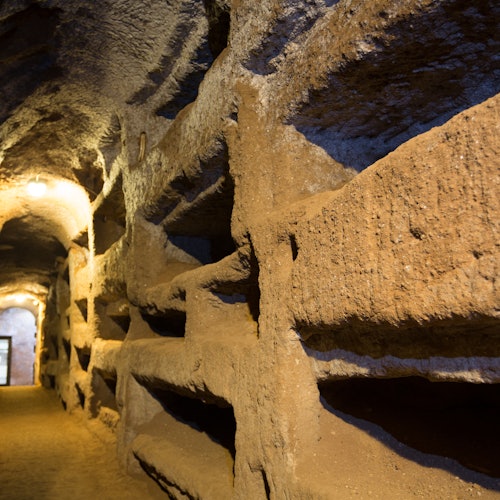
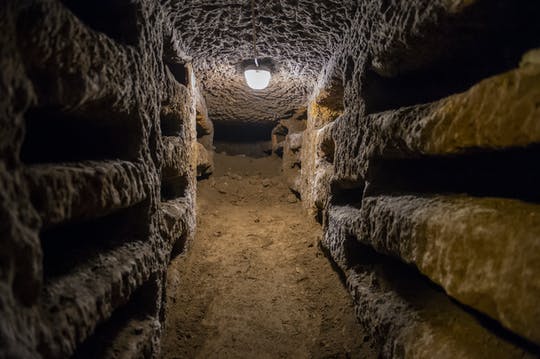
In Rome’s catacombs, the city’s volume drops: temperature, light, and pace all shift at once. A guided visit is the difference between “old tunnels” and a coherent story, because the meaning lives in small signs, burial customs, and the way early communities used space.
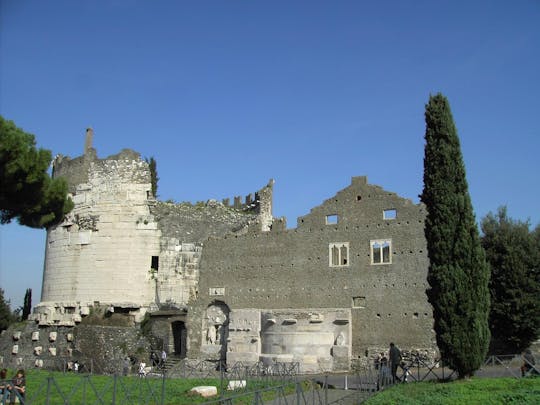
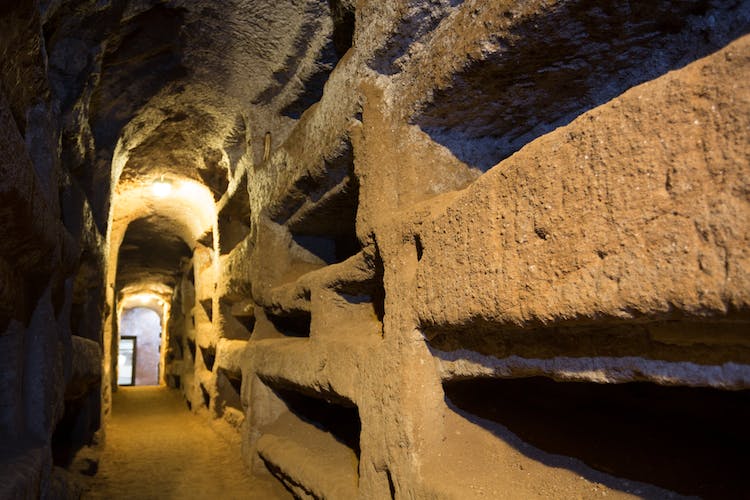

Choose this format when you want clear narration and minimal decision fatigue: you meet your guide, follow a logical route, and surface with the context still fresh. If you’re building a fuller itinerary, pair an underground morning with day trips from Rome for a clean contrast between tight corridors and wide landscapes.
⚖️ Quick comparison
- Classic visit: focused route, simple logistics.
- With transfer: less planning, more comfort.
- Different catacombs: different mood, same core theme.
🧭 Practical tips
- Bring a light layer for cool underground air.
- Wear steady shoes for uneven steps.
- Skip it if tight spaces feel uncomfortable.
Priscilla Catacomb: intimate passages with a vivid aftertaste
Some underground visits feel like a corridor you pass through; Priscilla tends to feel like a conversation in whispers. It’s a strong pick if you want a smaller-scale experience where details land: carved niches, faded imagery, and the sense of a city carefully folded beneath another.
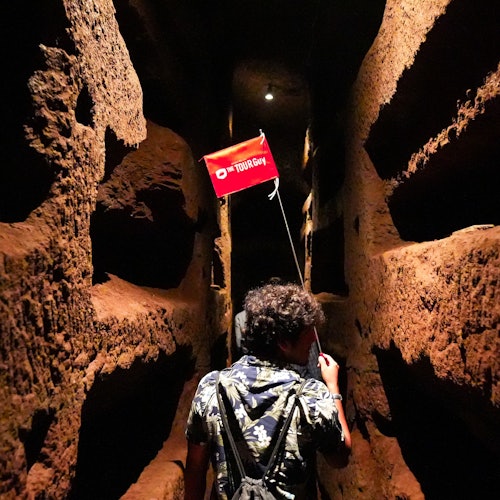
This works especially well as your first underground stop because it teaches your eye what to look for. Later, when you drop under a monumental site, you’ll notice how scale changes but the human impulses stay similar.
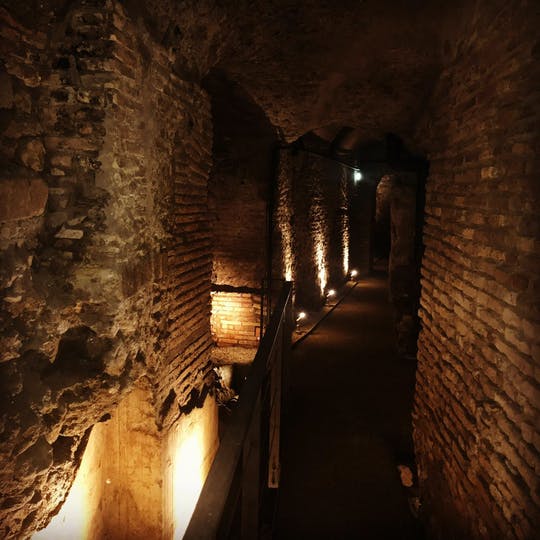
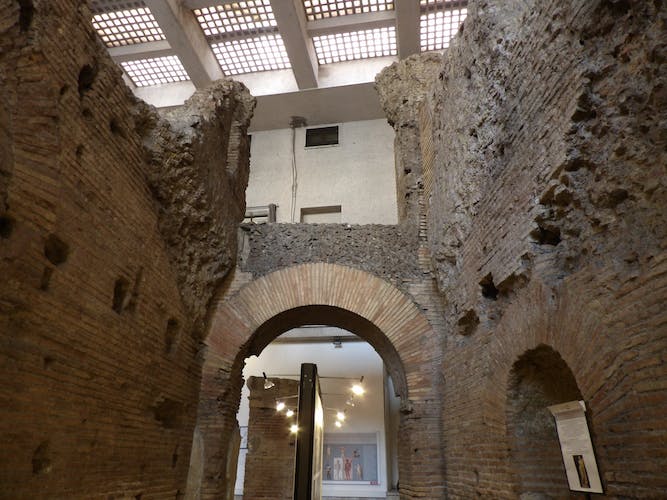
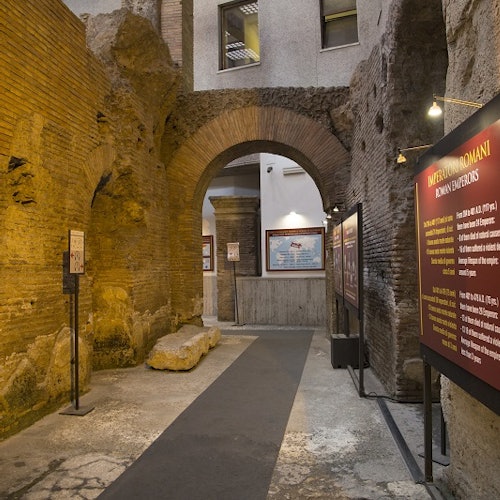
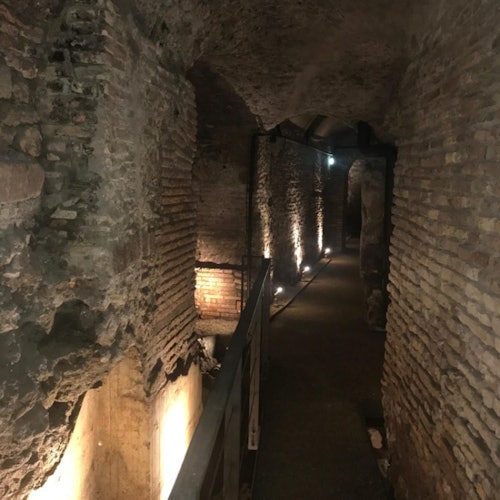
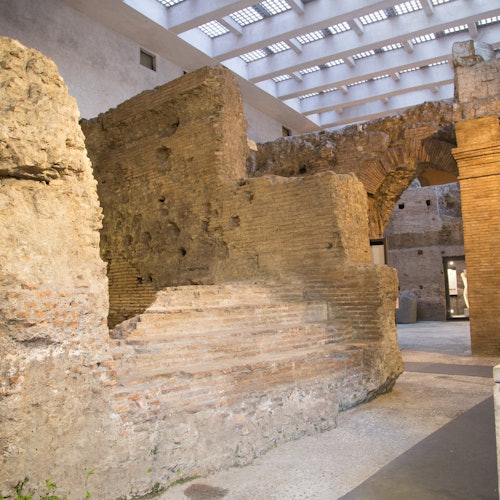
Pick an entry style that matches your attention span. Audio-guided options reward people who like moving at their own rhythm, while guided formats shine when you want the story stitched together, from athletic contests to the square’s modern theater.
If this “layers in the city center” vibe hooks you, make your next big contrast a full-day escape: Pompeii tours from Rome turn the idea of preserved time into a whole landscape.
⚖️ Quick comparison
- Audio guide: freedom, slower personal pacing.
- Exclusive tour: deeper context, fewer distractions.
- Multimedia: fast overview, lighter on detail.
Vatican Underground: St. Peter’s depth, guided and grounded
St. Peter’s Basilica is already overwhelming above ground; adding the underground dimension makes it feel structural, not just spectacular. With a guide, the experience becomes a clear narrative about place, ritual, and the way Rome builds meaning by building on itself.


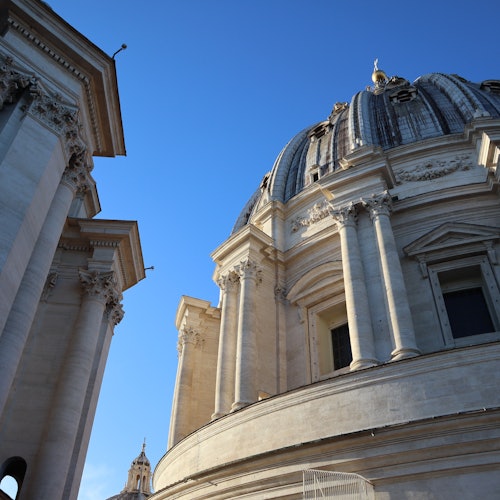
This is a smart choice when you want confidence in what you’re seeing: routes can be busy, and details are easy to miss without someone pointing out the quiet logic behind grand spaces. Expect stairs and uneven surfaces; comfort matters more than fashion here.
Santa Maria Maggiore underground: a calmer descent, close to the center
When you want “underground Rome” without the biggest crowds, Santa Maria Maggiore can feel like the sweet spot. The vibe is less theatrical and more contemplative, with hidden spaces that make the basilica’s history feel tactile.
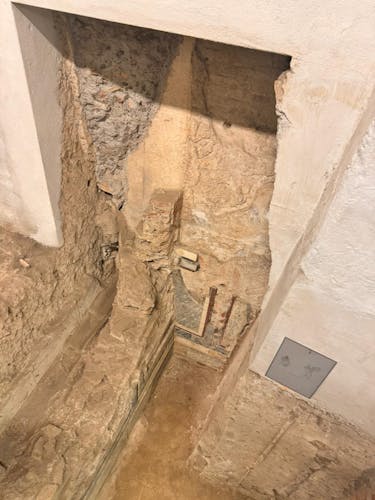
It pairs beautifully with a surface-level wander in the same day, because the shift is immediate: sunlight, traffic, and then the quiet under-layer where time slows down. It’s also a good option if you prefer underground sites that feel spacious rather than tight.
Case Romane del Celio: domestic Rome hidden in a quiet corner
Not all underground Rome is monumental; sometimes it’s surprisingly human. The Case Romane del Celio leans into everyday life, with rooms and traces that pull you away from “empire” and toward how people actually inhabited space.
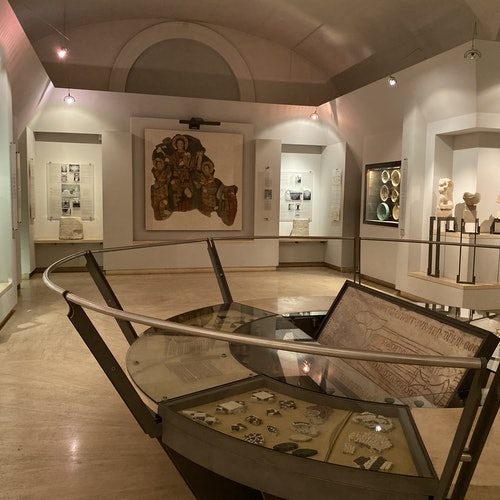
This is the kind of stop that pairs well with a high-impact headline attraction, because it resets your attention. The reward is subtle: less spectacle, more proximity.
Leonardo da Vinci Exhibition: a smart indoor break between descents
Underground days can be surprisingly tiring: stairs, darkness, concentration. A Leonardo exhibition is a good reset, swapping silence for inventive energy and giving your trip a different kind of “hidden mechanisms” story, only this time in ideas and devices.

It’s also a practical choice when weather turns, or when your group wants variety without splitting up. Keep the underground theme going by noticing how Rome preserves not only stones, but curiosity.
Frequently asked questions
What is the best underground tour in Rome?
The “best” depends on your goal: choose catacombs for atmosphere and early history, Navona Underground for layers in the city center, and Vatican underground access for structured context inside a major basilica. Check GuruWalk's activity catalog to compare what fits your pace.
Is it worth going to the catacombs in Rome?
Yes if you want a side of Rome that feels quiet, physical, and different from plazas and museums. It’s less about grand ruins and more about meaning and mood, especially with a guide who explains what you’re actually seeing.
How long does it take to tour the catacombs in Rome?
Many guided visits are around an hour once you’re on site, while versions with transfers take longer because they add transport time. Check GuruWalk's activity catalog for the most accurate durations on your date.
Which catacomb is best to visit in Rome?
For a classic first visit, many travelers pick a well-known catacombs guided tour for clear storytelling. If you want a smaller-feeling experience, the Priscilla Catacomb option can be a strong choice. In GuruWalk’s catalog you can compare review volume and language options.
Is the Trevi Fountain underground tour worth it?
If you enjoy “Rome as an onion,” it can be worth it because it flips a crowded landmark into a hidden, explanatory experience. It’s best for people who like context over views and don’t mind stairs.
Is it worth it to tour the underground of the Colosseum?
It’s worth it if you want the “backstage” angle: the underground adds mechanics and tension to what can otherwise feel like a huge shell. If you prefer quieter spaces and symbolism, catacombs may feel more personal.
How many people have got lost and died in the catacombs?
Modern visits are organized, guided, and restricted to safe routes, so getting lost on a standard tour is not the real risk. The sensible concern is comfort: tight spaces, stairs, and temperature. Pick a guided option and follow instructions for a low-stress experience.
What not to do at the Trevi Fountain?
Avoid anything that turns a quick stop into trouble: don’t sit on restricted edges, don’t block passages, and keep your belongings close in crowds. The best “rule” is simple: move with courtesy and awareness, then save the deeper history for an underground visit.
What is considered budget-friendly for underground tours in Rome?
In our catalog, several underground entries and guided visits sit around the 10–20 € range, while options that include transfers can jump to higher brackets. Check GuruWalk's activity catalog to see the latest prices for your date.
About the author

Author: Belén Rivas, GuruWalk
Publication date: 2025-12-12
Data updated as of December 2025