Tour image 0Tour image 1Tour image 2Tour image 3Tour image 4Tour image 5Tour image 6Tour image 7Tour image 8

Cape Slavery, Islam, Apartheid and the Colours of Bo-Kaap.

Welcome to Cape Town!
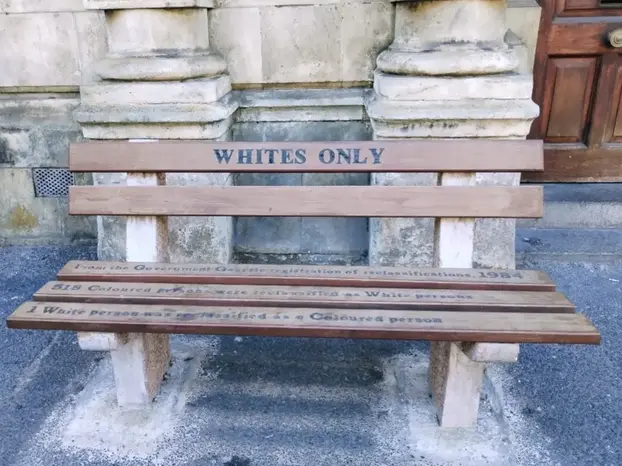
Join me as we travel back in time to the Cape, to the years long before the stop offs by Portugues explorers and the arrival of the VOC / Dutch East India Company. Our journey explores the introduction of the Dutch Reform Church, the arrival of the first slaves, the proselytizing of Islam and the rise of Afrikaner Nationalism and the legislation of Apartheid in South Africa. Did you know that during the years of Apartheid, special courts were set up to reclassify South Africans who felt the need to appeal their race classification. This was very often in the case where families had been split. These reclassifications were based on a person's appearance, language, social circle and even food consumed.
Our visit to the Bo Kaap / Upper Cape traces its origins to the early days of the Dutch settlement and the growing need for low cost housing. Here we will discover the truth behind the colour houses and the reason for the clustering of Muslim families in a single nieghbourhood.
The Auwal Masjied, first Mosque in South Africa  is situated here and you will also learn about its founder Prince Abdullah bin Qadi Abdusalaam aka Tuan Guru. The Bo-Kaap's colorful historic narrative is also the story of the Afrikaans language, from its earliest birthing as a kitchen Dutch to Arabic Afrikaans to one of South Africa's 12 official languages. Our walk includes stops at Bo-Kaap's  famous Atlas Spice store, stockists of imported spices rice beans and seeds. Their variety of fynbos medicinal teas are practically world renowned. Also for a unique selection of scented candles and colorful Bo-Kaap printed fridge magnets amongst other, Noors home-based store is also a delightful stop. Experience has taught us that our taste buds have the best memory, so we've decided it necessary to  conclude our time together tastefully by sampling a Koesister, a unique Cape Malay sweet treat for your send off. 

In short, Cape Slavery Islam Apartheid and Colours Of The Bo-Kaap is a journey through a complex timeline of history peoples and politics, culture and custom, heritage and ultimately cuisine. No wonder we are called The Rainbow Nation. 


The tour lasts 3 hours
Available in English

Nathan Arthur
Guide: Nathan Arthur
PRO
Guiding since 2023
Hi I am Nathan Arthur Festus. I am a South African citizen and was born in Cape Town, also known as the Mother City. I am an experienced and seasoned City tour guide. I started my career as a City guide in 2018 and have found it to be immensely fulfilling. My tours are authentic, exposing you the guest to the various political dispensations through which our city and country have gone. Discover the Bo Kaap with me. Ŕŕtťþ

10 stops
2.1 km walking
3 hours
Meeting point:149A Longmarket St, Cape Town City Centre, Cape Town, 8001, South AfricaWe meet outside the Izeko Old Townhouse Museum located at 149 Longmarket Street Cape Town Central. The Old Townhouse Museum is directly opposite Greenmarket Square African Crafts and Curio Market. LOOK OUT FOR THE BRIGHT RED GURUWALK UMBRELLA. Open in Google Maps
1
Outside visit
Green Market SquareGreenmarket Square is a historic square situated in the heart of Cape Town central business district. It originally served as a produce and slave market site and overtime as a carpark, flea market and today primarily as a Tourist Pan African Market. It is also the location of the Old Town House which functioned as the center of the growing Town's administration. It was converted into the Iziko old Townhouse museum as part of the declaration of the Square as a National Monument site in 1965.
2
Outside visit
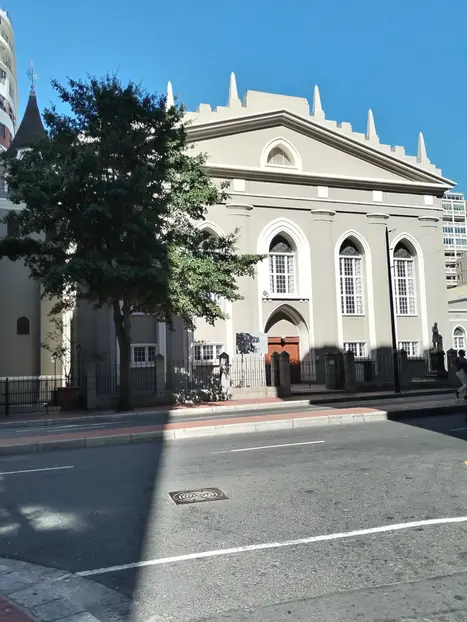
Groote KerkThe Groote Kerk Dutch Reform Church dates back as the first Christian denomination established at the Cape Of Good Hope and the only Christian Church allowed to practice at the Cape. It highlights the birthing of separate services and eventually separate congregations of faith.
3
Outside visit
Iziko Slave LodgeThe Slave Lodge built in 1679 dates back as the second oldest building in Cape Town South Africa. Built to house slaves, property of the VOC Dutch East India Company. From Slave Lodge to British Government offices and Supreme Court, today houses the Izeko Slave Lodge Museum since 1998.

Cape Slavery, Islam, Apartheid and the Colours of Bo-Kaap.


How does a free tour work?

1

Choose and book

Select a tour, date and time. Booking is free.

2

Enjoy the tour

Go to the meeting point and live the experience with your guide.

3

Pay what you want

At the end, you decide how much to pay based on your satisfaction.

Free cancellation and booking
GuruWalk
© GuruWalk SL
·····